The effects of parental screen time
Updated: Apr 28
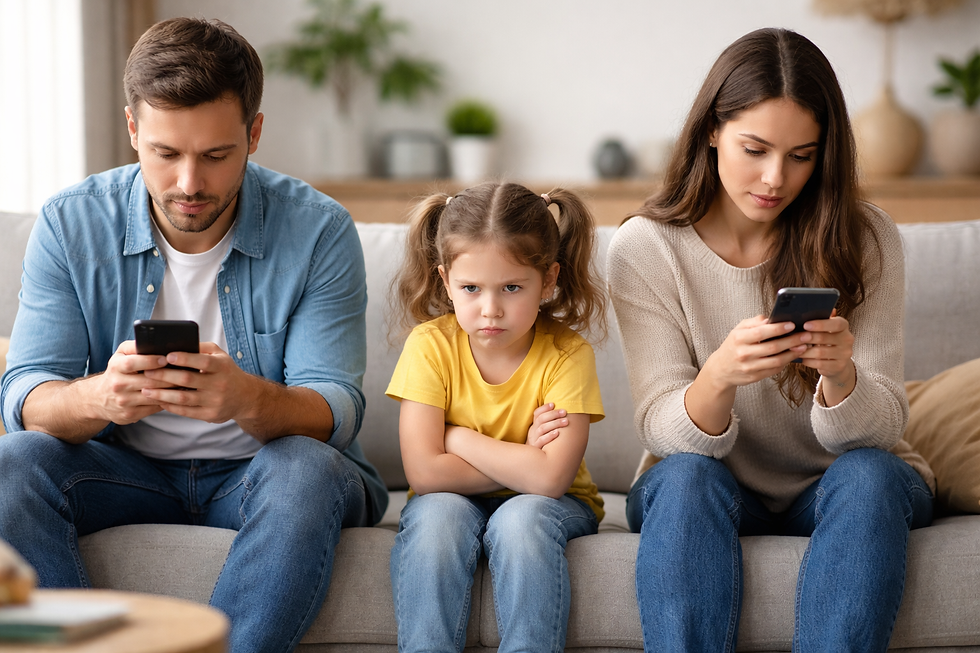
Research shows that when devices interrupt parent-child interactions, it can have detrimental effects. This phenomenon in the literature is referred to as “technoference” or “parental phubbing”.
A 2025 YouGov survey of 1000 Australian parents found that:
Parents spend about four hours a day on personal screens
9/10 parents also admitted to using screens during playtime
Nearly half of Gen Z parents used screens to calm tantrums
Compared to one-third of Millennials and 6% of Gen X
A 2025 meta-analysis of 14 900 children across 10 countries was conducted by Australian researchers Toledo-Vargas et al showed parental device use was linked to:
Lower cognitive development
Weaker parent–child attachment
More behavioural issues and
Higher levels of screen time in children
A 2023 meta-analysis of 56,275 Chinese children by Zhang et al showed the harmful effects of parental phubbing. The researchers found that the effect was more profound when both parents engaged in phubbing. The negative effects included effects on children’s:
Social-emotional development
Mental health and
Behaviour
In conclusion, research suggests that parental device use can hinder parent–child interactions. This is critical for cognitive development, emotional regulation, social learning and emotional well-being. To minimise this, limiting parental screen time in the presence of children is recommended.


Comments